Los programas de atención diurna para adultos y HCBS están bajo más presión que nunca. El personal está al límite, los requisitos de documentación no paran de crecer, la supervisión de Medicaid se está endureciendo y las familias esperan más. Se supone que la tecnología ayuda con todo esto. Para muchos proveedores, se ha convertido en un problema más que gestionar.
Estos son los desafíos que escuchamos con más frecuencia y por qué son importantes.
1. Todavía operando con papel
La documentación en papel sigue siendo muy común en este sector, y los costos son reales. Las hojas de asistencia se pierden. Las notas manuscritas son difíciles de auditar. Los registros de facturación tardan horas en conciliarse. La información que debería llegar a un familiar o a un cuidador se queda en un archivador.
Esto ya no es solo un problema de eficiencia. A medida que los estados y las organizaciones de atención administrada exigen informes más detallados y oportunos, los proveedores que todavía usan papel están cada vez más expuestos. Lo que antes era un inconveniente se está convirtiendo en un riesgo de cumplimiento.
2. Sistemas desconectados
Muchos proveedores han dejado de usar papel, pero han terminado en una situación casi igual de frustrante: una mezcla de herramientas que no se conectan. Una aplicación de programación, una plataforma de facturación separada, un tercer sistema para la documentación. El personal copia información entre sistemas, se cometen errores y nadie tiene una visión completa de lo que sucede con cada participante.
Cuando sus sistemas no se comunican entre sí, su equipo dedica más tiempo a gestionar la tecnología que a cuidar a las personas. Una única plataforma que gestione la programación, la documentación, la facturación y la comunicación familiar en un solo lugar no es un lujo. Es la forma en que funcionan los buenos programas.
3. Cumplimiento de EVV
La Verificación Electrónica de Visitas (EVV) es ahora un requisito federal para los servicios de cuidado personal y de salud en el hogar bajo Medicaid, y los estados se encuentran en puntos muy diferentes en cuanto a cómo lo están aplicando. Para muchos proveedores de HCBS, EVV ha significado añadir otro portal o aplicación a una infraestructura tecnológica ya saturada, con una guía mínima sobre cómo hacerlo funcionar en el día a día.
El problema mayor es que los datos de EVV a menudo terminan aislados. Registra si se realizó una visita, pero no se conecta con la documentación de atención, la programación o la facturación de ninguna manera significativa. Ahí es donde se pierde el valor real.
4. Facturación a múltiples pagadores
La mayoría de los programas de atención diurna para adultos y HCBS trabajan con una combinación de exenciones de Medicaid, financiación de VA, contratos de atención administrada, seguros de atención a largo plazo y pago privado. Cada pagador tiene reglas diferentes, diferentes requisitos de autorización, diferentes formatos de reclamación y diferentes plazos.
Gestionar eso a través de múltiples sistemas, o manualmente, conduce a errores, pagos retrasados y dinero que se queda sin cobrar. Los proveedores necesitan una configuración de facturación que cubra todo en un solo lugar, incluyendo el procesamiento de pagos privados, y que realice la mayor parte del trabajo pesado de forma automática.
5. Familias que se quedan fuera
Las familias quieren saber qué está pasando con su ser querido. Eso es razonable, y cada vez más es una expectativa en lugar de una preferencia. Pero muchos programas no tienen una forma estructurada de mantener a las familias informadas más allá de una llamada telefónica o un boletín mensual.
La brecha se manifiesta de más maneras que solo en las puntuaciones de satisfacción familiar. Cuando las familias no están informadas, se pierden las señales de advertencia tempranas. Son menos útiles como cuidadores. Y es menos probable que recomienden a otros el programa. Dar a las familias visibilidad en tiempo real sobre la atención es una de las inversiones de mayor rendimiento que un proveedor puede hacer.
6. Demostrar sus resultados
Los financiadores quieren datos. Las organizaciones de atención administrada quieren datos. Las agencias estatales quieren datos. La pregunta "¿qué diferencia está marcando?" surge en cada renovación de contrato, cada auditoría, cada RFP.
Los proveedores que no pueden responderla claramente están en desventaja. Y para los programas que dependen de registros en papel o sistemas desconectados, recopilar ese tipo de informes consume una enorme cantidad de tiempo. Los programas mejor posicionados para el futuro documentan la atención de maneras que producen naturalmente los datos de resultados que necesitan, sin trabajo adicional en el momento de la elaboración de informes.
7. Lograr que el personal realmente utilice la tecnología
La mejor plataforma del mundo no sirve de nada si el personal no la utiliza. Los trabajadores de atención directa en centros de día para adultos y entornos HCBS tienen experiencia tecnológica variada, y la rotación de personal es alta. Un sistema que tarda semanas en aprenderse, o que parece diseñado para un hospital en lugar de un entorno de atención comunitaria, tendrá una baja adopción. Una baja adopción significa registros incompletos, lagunas en la facturación y gerentes frustrados.
El software en este sector debe ser lo suficientemente sencillo como para aprenderse rápidamente, en cualquier dispositivo, desde el primer día. Esto no es un extra. Es lo que determina si la inversión realmente vale la pena.
8. Seguridad de los Datos
Dejar de usar papel crea nuevas responsabilidades en torno a la seguridad de los datos. La información de salud de los participantes debe almacenarse y transmitirse de forma segura. El personal accede a los registros desde teléfonos y dispositivos compartidos. La información se mueve entre proveedores, familias y sistemas de facturación.
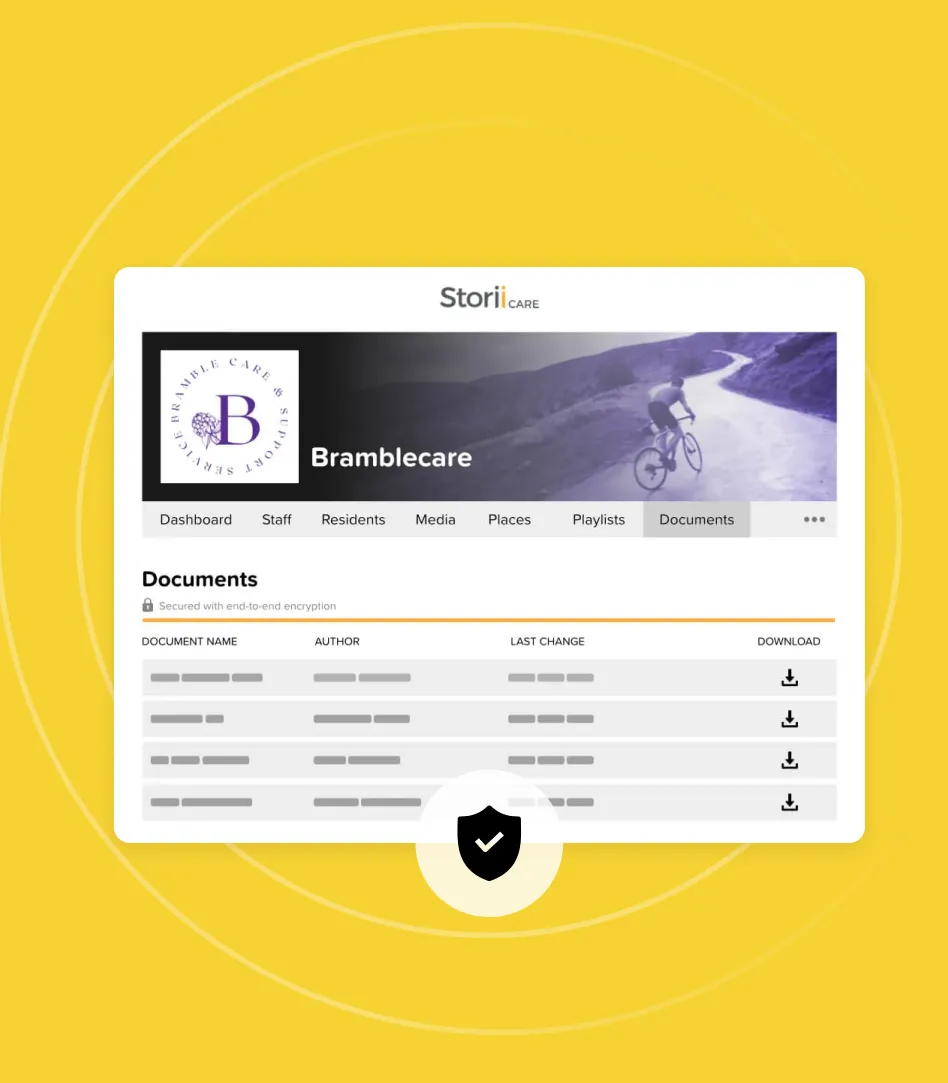
La mayoría de las organizaciones de centros de día para adultos y HCBS no tienen un equipo de TI dedicado, lo que significa que la seguridad depende en gran medida del proveedor que elijan. El cumplimiento de HIPAA, la certificación SOC 2 Tipo II, el cifrado y las auditorías de seguridad periódicas no son solo requisitos a cumplir. Son la base para operar de manera responsable con datos sensibles.
Cómo ayuda StoriiCare
StoriiCare fue diseñado para centros de día para adultos y proveedores de atención comunitaria. No fue adaptado de un EHR hospitalario ni modificado a partir de una plataforma de atención domiciliaria. Fue creado para estos entornos desde el principio.
Esto significa registro digital, documentación de atención en tiempo real y facturación integrada para Medicaid, VA, atención administrada y pago privado, todo en un solo lugar. La aplicación familiar (Family App) brinda a los seres queridos visibilidad directa de la atención diaria y la participación en actividades. Los análisis integrados simplifican la elaboración de informes. Y StoriiCare cuenta con la certificación ONC Health IT, cumple con HIPAA y tiene la certificación SOC 2 Tipo II, para que los proveedores sepan que sus datos están protegidos.
El personal aprende a navegarlo rápidamente. La documentación se completa. Los gerentes obtienen la visibilidad que necesitan. Así es como se ve un sistema diseñado específicamente.
¿Quiere verlo en acción? Solicite una demostración en storiicare.com.
Etiquetas: Software para Centros de Día para Adultos, Tecnología HCBS, EHR, Gestión de la Atención, Transformación Digital, StoriiCare, Medicaid, EVV
.png)